Start at the supply
Identify the actual water source before selecting equipment. A mains tap, a gravity-fed rain barrel and a pumped supply behave differently. A drip kit designed for a pressurised tap may not work from a low barrel, while a timer can require a minimum pressure to open correctly.
Measure the route with bends and obstacles included. Avoid running a hose across steps or a shared walkway if another route is available. Choose enough length for comfortable access, but remember that unnecessary length adds handling weight and can contribute to pressure loss.
Check local water-use restrictions and rules for protecting the drinking-water supply. Backflow protection must suit the installation and local requirements. In the United Kingdom, Water Regs UK and the relevant water supplier are useful starting points; in other regions, use the local water authority. Do not assume an ordinary quick connector provides the required protection.
Pick the simplest delivery
| Method | Best starting use | Main compromise |
|---|---|---|
| Watering can | A few pots or delicate hand watering | Repeated lifting and filling |
| Hose with adjustable nozzle | Mixed jobs and changing layouts | Routing, storage and attentive use |
| Drip line or individual emitters | Stable rows or groups of containers | Setup, filtration and regular inspection |
| Soaker hose | Suitable planted ground with compatible supply | Distribution varies with length, pressure and placement |
A can remains a useful reference point because you can see where the water goes. Choose a filled weight you can carry comfortably rather than the largest capacity available. A removable rose should attach securely and be easy to clean.
A hose is flexible when plants move around. Check the internal diameter, connector size, bend behaviour and the reel’s stated capacity. “Universal” fittings may still have limits. Read the specification for both sides of every connection.
Match the whole chain
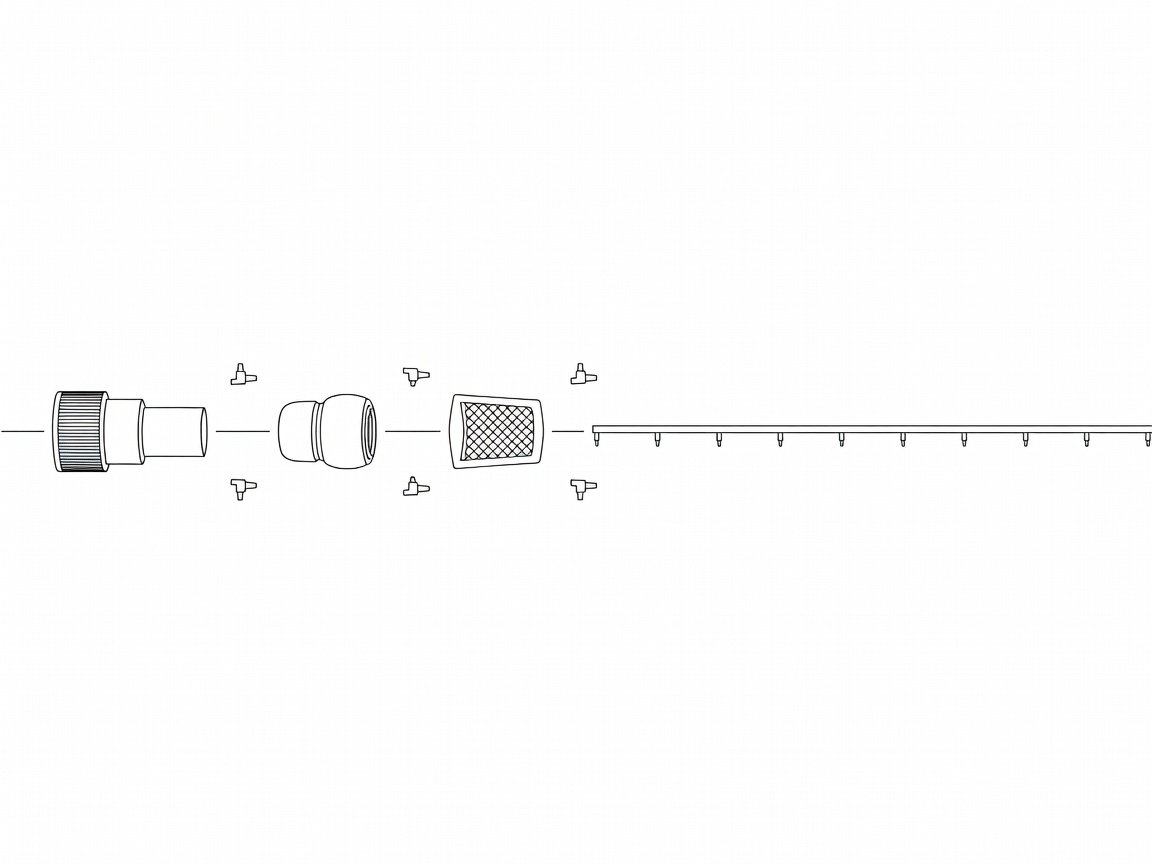
Write a short connection list: tap thread, adapter, hose coupling, hose, delivery attachment and any filter or regulator. Thread sizes and hose diameters are not interchangeable measurements. If a product listing is unclear, ask the supplier for the precise compatibility information before ordering.
Gardena and Hozelock are familiar examples of consumer connection systems, while irrigation specialists such as Rain Bird and Hunter offer other fittings and components. These names describe real ranges, not an endorsement or a promise that parts from different systems will fit together.
For drip irrigation, check the specified operating pressure, required filtration and maximum line length. Pressure-compensating emitters operate within a stated range; they do not make every supply suitable. Uneven levels, long runs and small tubing can still affect performance. Use the maker’s layout guidance rather than guessing how many emitters a kit can support.
Automate only after testing
Install a small trial section and observe it before connecting the whole garden. Confirm that each emitter delivers water, joints remain secure and the root zone becomes suitably moist without persistent runoff. A wet patch at the surface does not establish that the entire root ball has been watered.
A timer is a switching device, not a plant-care decision. Set an initial schedule from observation, then adjust for weather, growth and the growing medium. Check what happens after a power interruption or flat battery, and whether the device has a manual stop that is easy to reach.
Soil-moisture sensors can add useful information, but placement matters. One sensor beside a shaded pot may not represent sunny containers at the other end of a balcony. Test the arrangement while you are at home before relying on it during an absence.
Maintain the small parts
Inspect seals, washers and couplings when leaks appear. A damaged inexpensive seal can make an otherwise serviceable system frustrating to use. Keep spare parts labelled by size and system so they are easy to identify later.
Clean filters and flush lines as the manufacturer recommends. Keep open pipe ends out of soil during installation. Before freezing conditions, follow the instructions for draining, removing timers and storing parts; different equipment requires different treatment.
Rain barrels need secure lids, stable supports and an overflow route that does not damage nearby structures. Do not treat harvested rainwater as drinking water. A pump, if needed, introduces additional electrical and maintenance requirements and must be selected for the intended supply and use.
Judge the outcome honestly
Efficient watering comes from suitable delivery, sound connections and timely adjustment. We do not attach a fixed water-saving percentage to drip systems or timers: results depend on the previous method, weather, soil, plant needs and maintenance.
Buy a system you can inspect easily. If the arrangement becomes too complicated to understand, simplify the zones or start with manual watering while you learn the space. Reliable observation remains useful even when the hardware becomes more sophisticated.